HAL Lower Limb Type
The HAL Lower Limb Type—not to be confused with HAL—is one of the best-known models designed by the Japanese company Cyberdyne, and the world’s first to integrate a non-invasive brain-machine interface for…
At a glance
The full review
HAL Lower Limb Type: The world's first intention-driven medical cyborg
The HAL Lower Limb Type—not to be confused with HAL—is one of the best-known models designed by the Japanese company Cyberdyne, and the world’s first to integrate a non-invasive brain-machine interface for the social care sector. This lower-limb model is known for its unique cybernetic control technology, which achieves a more than perfect human-machine interface. Let’s find out more.
Characteristics of HAL-type bottom lamb
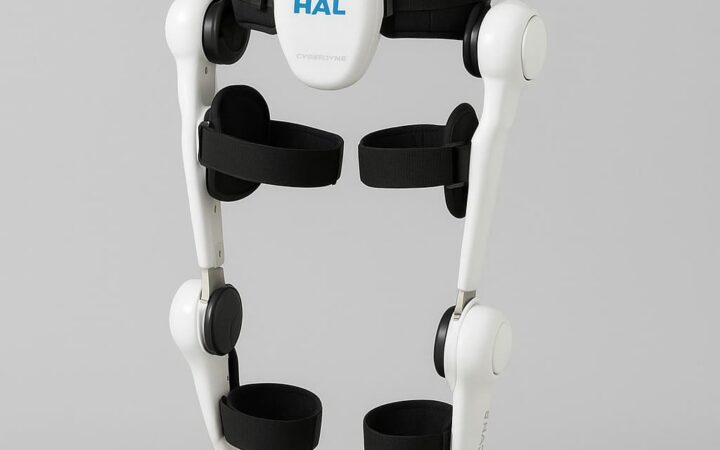
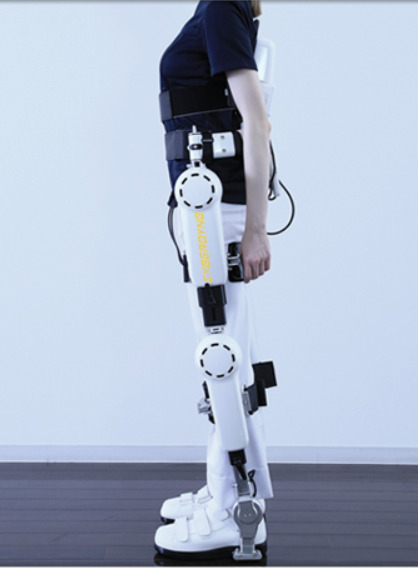
Unlike other conventional robotic systems, which impose preprogrammed movements on the user, the HAL lower-layer type detects bioelectric signals (BES) emitted from the brain to the muscles. In fact, these very small, low-amplitude electrical currents are captured on the skin’s surface using specialized electrodes before any physical movement begins. In terms of its design, the device consists of a rigid articulated frame weighing approximately 14 kg. It is also equipped with high-performance electric actuators located at the hips and knees.
The latter are capable of providing sufficient motor torque to support body weight while simultaneously increasing the user’s strength. The HAL Lower Limb Type is highly adjustable, as it is equipped with telescopic supports, allowing it to accommodate a wide range of body types from 150 to 185 cm.To operate, our relies on a lithium-ion battery system housed in a compact back-mounted unit, offering a runtime of 90 to 120 minutes in continuous mode.In addition, plantar force and angle sensors are integrated with the HAL Lower Limb Type for real-time position monitoring to ensure optimal safety throughout use. Finally, a control interface is available to allow operators to fine-tune the support ratio (from 0% to 100%). This requires a specialized application to adapt the robotic assistance to the user’s fatigue or remaining capabilities.
Tests and inspections of HAL lower accuracy class types
Feedback on the HAL lower-body system: Its primary goal is to enhance effectiveness in functional regenerative therapy. Studies have also shown that HAL actively stimulates neuroplasticity.For example, studies at rehabilitation centers in Europe and Japan show significant improvements in walking speed and postural balance after just 10 to 15 sessions, which is very interesting. However, users emphasize that the not only helps them walk comfortably but also “teaches” them proper walking habits.
Not only because the tester described the sensation as a natural extension of his body, where the machine responds to his thoughts without any noticeable latency. Therapists particularly appreciate the real-time display feature on the tablet, which allows them to see which muscles (extensors or flexors) the user is actually activating; this facilitates targeted rehabilitation.Overall, feedback has been extremely positive regarding the fluidity of movement, which is considered superior to systems based on tilt sensors. However, some experts point out that the BES sensors are sensitive to sweat or body hair, which may sometimes require adjustment during a session. The general consensus among wellness centers is that HAL is the most effective tool for transitioning from a seated position to independent walking, although its high price (often offered through leasing) limits its use to state-of-the-art facilities.
Want to explore the universe? Our blog posts will guide you.