RoboGait
What we like
- Powered assistance that adapts as you move Focused support for the lower limbs Designed for rehabilitation and recovery
What to weigh up
- Price is on request only Battery to charge and keep topped up Typically a clinical, supervised device
RoboGait: Medical Advance Payment for Assisted Walking Rehabilitation
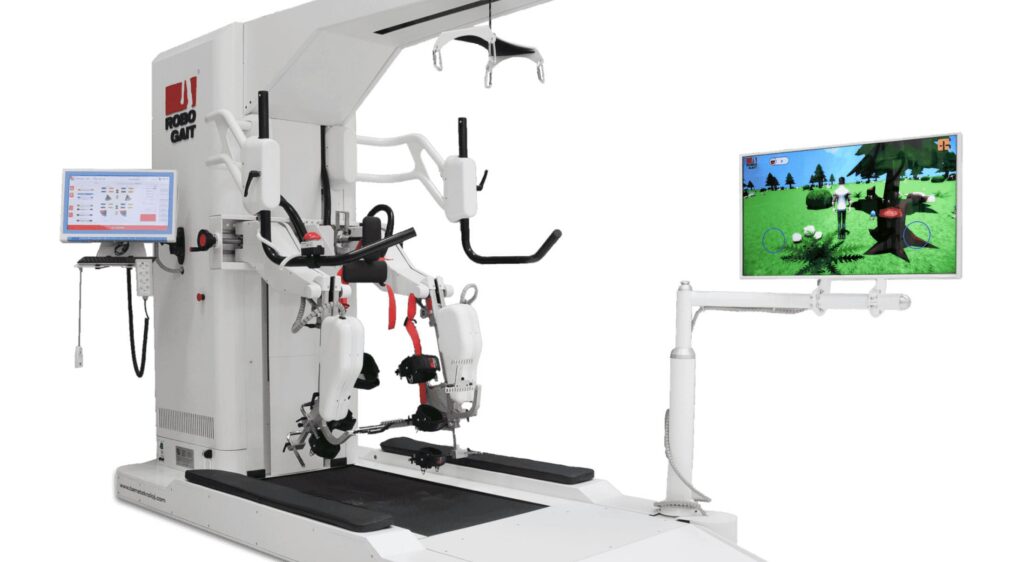
When it comes to technology, Turkey has made a big splash with its robotic gait rehabilitation system. RoboGait is indeed a highly advanced system. Designed to provide patients with a natural, physiological walking pattern, RoboGait, thanks to its computer-controlled robotic orthosis, accelerates the treatment process for patients seeking improved mobility to regain and enhance their ability to walk. What is the value of this system introduced by Bama Technology?
Features of RoboGait
This is an extraordinary device. And for this reason, RoboGait is a robotic rehabilitation system that features a fixed connection between a robotic orthosis and a treadmill, with the two directly synchronized.Its purpose is to restore a physiological gait pattern by guiding the lower limbs in a controlled and repetitive motion. Unlike the Autonomy or Phoenix SuitX, this assisted walking therapy device is innovative. The treadmill speed and RoboGait parameters are computer-controlled, allowing for the adjustment of step intensity and length, as well as speed and body weight, depending on the patient’s level.Furthermore, the RoboGait is designed to activate neural pathways. It improves gait, functional mobility, balance, and leg strength, all within the framework of, of course, a well-structured rehabilitation program.Finally, it is completely safe and provides an intense workout, making it ideal for therapeutic sessions at rehabilitation centers, especially long-term ones. Want to start shopping for the? Our comparison guide is here to help you.
Who is RoboGait for?
RoboGait is specifically designed for patients whose gait is altered by neurological and orthopedic conditions. They can therefore benefit from assisted and repetitive training. The device is intended for patients with:
Incomplete bone fracture,
Head injury,
Strike
Multiple sclerosis,
neurodegenerative disorders affecting locomotion,
Certain orthopedic conditions (injury or surgery involving the lower extremities).
In this second point, it is specifically used when the goal is to restore a functional and safe gait pattern. Specialized rehabilitation teams, such as MPR physicians, physical therapists, and occupational therapists, use RoboGait in hospitals and rehabilitation clinics.However, the patient profiles in question are unique. They must be capable of sustaining partial weight-bearing with minimal positional control and sufficient cardiovascular tolerance. In fact, training must be intensive and repetitive. Discover all our blog posts.
RoboGait Study and Review
RoboGait studies have shown that RoboGait, Assistant Walking Therapy, is capable of improving walking speed, as well as endurance, functional mobility, and certain measures of independence in neurological patients. This applies in particular to stroke or incomplete spinal cord injury.Furthermore, a study involving patients with chronic stroke found that sessions using the RoboGait system, combined with conventional physical therapy sessions, are more effective at improving walking than physical therapy alone. In the field, rehabilitation centers point out that the repeatability of training sessions, safety (harness, body weight control), and the ability to adjust parameters are key advantages. However, we must remember that results depend largely on the patient’s profile and the protocol established by the medical team. Need help? Contact us. Hey!
Community reviews are coming soon. Have you used this exoskeleton? Get in touch and tell us how it performed.
Share your experience →